Evaluating KDP Interior 110 Pages All Size for Self-Publishing
Self-publishing on Amazon Kindle Direct Publishing (KDP) requires precise technical specifications to ensure a professional final product. The KDP Interior 110 Pages All Size package is a digital asset collection designed to streamline the formatting process for low-content and medium-content books. This resource provides pre-formatted, blank interiors across sixteen distinct trim sizes, delivered as a ZIP file containing individual PDFs. Each file contains 110 pages of black and white content with bleed settings already configured.
For creators evaluating this asset, understanding its specific utility involves looking beyond the page count. It serves as a foundational template rather than a finished creative work. The value proposition lies in technical compliance and time efficiency. By offering exact dimensions in both imperial and metric measurements, this package addresses one of the most common friction points in self-publishing: formatting errors during the upload and proofing stages.
Technical Specifications and Format Compliance
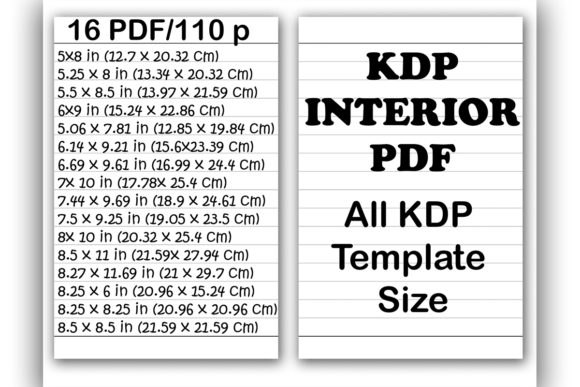
The primary function of this interior bundle is to provide technically accurate templates. Self-publishers often struggle with margin calculations and bleed requirements, which vary significantly depending on the chosen trim size. This package includes tested PDFs for the following dimensions:
- 5 x 8 in (12.7 x 20.32 cm)
- 5.25 x 8 in (13.34 x 20.32 cm)
- 5.5 x 8.5 in (13.97 x 21.59 cm)
- 6 x 9 in (15.24 x 22.86 cm)
- 5.06 x 7.81 in (12.85 x 19.84 cm)
- 6.14 x 9.21 in (15.6 x 23.39 cm)
- 6.69 x 9.61 in (16.99 x 24.4 cm)
- 7 x 10 in (17.78 x 25.4 cm)
- 7.44 x 9.69 in (18.9 x 24.61 cm)
- 7.5 x 9.25 in (19.05 x 23.5 cm)
- 8 x 10 in (20.32 x 25.4 cm)
- 8.5 x 11 in (21.59 x 27.94 cm)
- 8.27 x 11.69 in (21 x 29.7 cm / A4)
- 8.25 x 6 in (20.96 x 15.24 cm)
- 8.25 x 8.25 in (20.96 x 20.96 cm)
- 8.5 x 8.5 in (21.59 x 21.59 cm)
A critical feature of these files is the inclusion of bleed. In KDP terminology, bleed means the content extends to the very edge of the page, requiring no white border. This is essential for journals, sketchbooks, and planners where lines or graphics may touch the page edge. Because these PDFs are pre-tested, they reduce the risk of rejection due to margin violations or incorrect bleed setup. The black and white color profile is optimized for standard printing costs, ensuring that users do not accidentally select premium color options that would erode royalty margins.
Strategic Benefits for Low-Content Publishers
The decision to use a pre-made KDP Interior 110 Pages All Size bundle typically stems from a need for operational efficiency. Creating sixteen separate, technically compliant documents from scratch requires significant time and graphic design software proficiency. For publishers managing multiple niches, this asset acts as a scalable infrastructure.
Speed to Market: Eliminating the formatting phase allows creators to focus entirely on cover design and keyword research. Since the interior is static and ready-to-use, the publishing timeline is reduced from days to hours.
Risk Mitigation: Formatting errors are the leading cause of publishing delays. Using tested templates removes variables associated with manual setup. This is particularly valuable for new publishers who may not yet understand the nuances of gutter margins and safe zones across different trim sizes.
Versatility Across Niches: The variety of sizes supports diverse product types. The 6x9 and 5.5x8.5 formats are industry standards for journals and notebooks. The 8.5x11 and A4 sizes cater to activity books, worksheets, and large-print planners. Square formats like 8.25x8.25 and 8.5x8.5 are suitable for children’s coloring books or specialized art journals. Having all sizes available allows a publisher to test market demand without additional production costs.
Tradeoffs and Limitations
While efficient, utilizing a standardized KDP Interior 110 Pages All Size package involves specific tradeoffs that must be weighed against project goals. Objectively evaluating these limitations prevents misalignment between the tool and the intended outcome.
Lack of Differentiation: Because these interiors are generic and widely available, books created solely with this asset will share identical internal structures with thousands of others. In saturated niches, this can lead to commoditization. If the value proposition of a book relies on unique layouts, prompts, or specialized tracking systems, a generic blank interior is insufficient.
Fixed Page Count: The 110-page constraint is rigid. While this length is optimal for many journals to maintain a competitive spine width and price point, it does not accommodate all projects. Comprehensive planners often require 200+ pages, while pocket guides may need fewer than 80. Users cannot easily alter the page count without potentially disrupting the file structure or requiring external editing software.
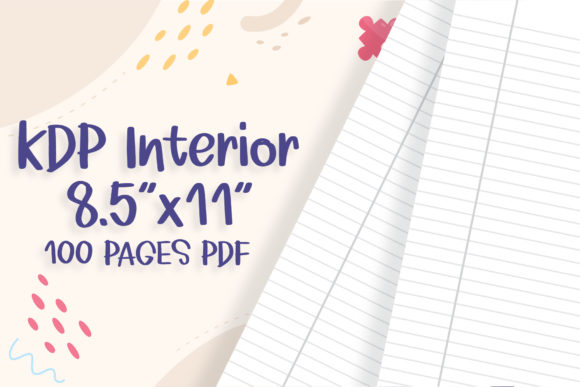
Creative Ceiling: These files serve as a baseline. They are best suited for lined notebooks, dot grid journals, or blank sketchbooks. For medium-content books requiring headers, footers, page numbers, or instructional text, significant modification is necessary. Users should view this as a starting canvas rather than a complete solution for complex publications.
Determining Fit: When to Use vs. Alternatives
Selecting this resource depends largely on the publisher's current stage and business model. It is a strong fit for specific scenarios but less appropriate for others.
Ideal Use Cases
- New Publishers: Those learning the KDP ecosystem benefit from guaranteed technical compliance while they learn other aspects of the platform.
- High-Volume Strategy: Publishers focusing on quantity and broad niche testing need rapid deployment capabilities.
- Simple Notebooks: Projects requiring only lined, dotted, or blank paper are perfectly served by this asset.
- Series Expansion: Creators expanding an existing brand into new trim sizes can maintain consistency without reformatting.
When to Consider Alternatives
- Premium Brand Building: If the goal is to create a high-ticket item with proprietary content, custom-designed interiors are necessary to justify the price point.
- Complex Layouts: Books with varying page templates, interactive elements, or heavy text integration require custom formatting services or advanced DIY skills.
- Specific Page Counts: If market research indicates a competitor success at 150 pages, forcing a 110-page format may result in a non-competitive product.
Practical Decision-Making Insights
Before acquiring the KDP Interior 110 Pages All Size collection, conduct a brief audit of your publishing roadmap. Verify that the sixteen included trim sizes align with the niches you intend to enter. While the list is comprehensive, obscure sizes are excluded. Additionally, confirm that your design software can handle PDF imports if you plan to overlay custom elements onto these bases.
Consider the long-term viability of your catalog. Generic interiors are excellent for cash flow generation and learning, but sustainable brands eventually evolve toward custom assets. Use this package to validate concepts quickly; once a niche proves profitable, reinvest earnings into custom interior design to build a defensible moat against competitors using similar stock resources.
Finally, always verify file integrity upon receipt. Although marketed as tested, download the ZIP immediately and open a sample PDF in the KDP previewer tool. Confirm that the bleed settings trigger correctly and that the page count displays as expected. This proactive step ensures that the asset meets your technical requirements before you commit to a full publishing workflow. By approaching this tool with clear expectations regarding its capabilities and constraints, publishers can effectively integrate it into a broader, strategic self-publishing operation.