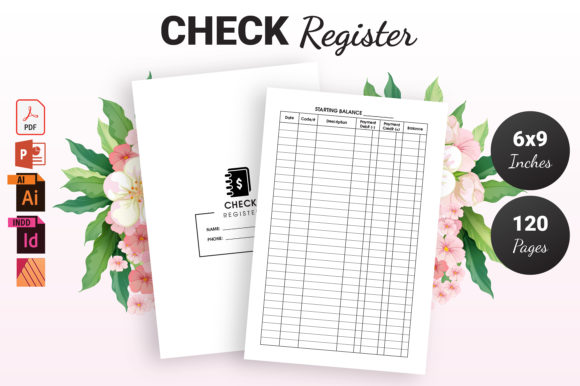
Check Register KDP Interior: Ready-to-Upload Files
Creating a successful low-content book on Amazon requires more than just a good cover; the interior must be functional, clean, and perfectly formatted. A Check Register KDP Interior serves as a practical financial tool for users who prefer tracking expenses manually or need a physical backup to digital banking apps. This specific template is designed to streamline your publishing process by providing professional-grade source files that eliminate technical guesswork. Whether you are an experienced self-publisher or launching your first notebook, having access to editable formats ensures your final product meets industry standards without requiring advanced design skills.
Understanding the Practical Value of Manual Expense Tracking
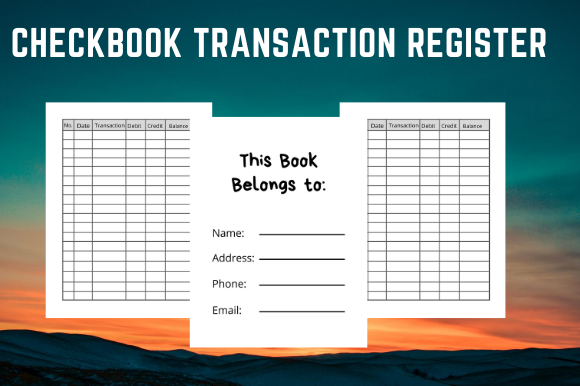
While digital finance tools dominate the market, there remains a significant demand for physical record-keeping. Many users find that writing down transactions helps reinforce spending habits and provides a tangible sense of control over their budget. A well-designed check register offers a dedicated space to log checks, deposits, withdrawals, and running balances. For KDP creators, this translates into a product that solves a genuine problem rather than just filling shelf space.
The appeal lies in simplicity and reliability. Unlike apps that may crash, require subscriptions, or suffer from connectivity issues, a printed register is always accessible. This makes it an ideal gift for seniors, students learning financial literacy, small business owners managing petty cash, or anyone practicing mindful spending. By offering a high-quality interior, you cater to customers who value durability and ease of use over digital complexity.
Technical Specifications for Seamless Publishing
One of the most common hurdles in KDP publishing is formatting errors during upload. This Check Register template is pre-configured to match Amazon’s strict printing guidelines, specifically tailored for the popular 6″ x 9″ trim size. This dimension is versatile enough to fit in a purse, glove compartment, or desk drawer while providing ample writing space. The file includes exactly 120 pages, striking a balance between substantial utility and cost-effective printing royalties.
Crucially, this interior is set up with No Bleed. This specification means all content stays safely within the margins, preventing text or lines from being trimmed off during the binding process. For beginners, no-bleed interiors are significantly safer and easier to manage. You do not need to worry about extending background elements to the edge of the page or adjusting safe zones. The layout is centered and optimized for standard white paper, ensuring crisp lines and legible text in the final printed book.
Why Source File Access Matters for Customization
What truly distinguishes this package from generic PDF-only downloads is the inclusion of fully editable source files. While the high-quality print-ready PDF allows for immediate uploading, the PPTX, AI, and INDD files unlock long-term creative freedom. Relying solely on a static PDF limits your ability to differentiate your brand in a competitive marketplace. With source files, you can modify headers, adjust column widths, add branding elements, or create niche-specific variations without rebuilding the layout from scratch.
- Adobe InDesign (INDD): The industry standard for multi-page layout. Use this file to make precise typographic adjustments, change master pages, or reflow content if you decide to alter the page count later.
- Adobe Illustrator (AI): Ideal for vector-based editing. If you want to redesign the table structure, add custom icons, or integrate complex graphics, the AI file ensures your lines remain sharp at any scale.
- PowerPoint (PPTX): A surprisingly powerful tool for non-designers. Many KDP publishers prefer PowerPoint because of its familiar interface. You can easily drag-and-drop elements, change fonts, or update text boxes without learning professional design software.
- Print-Ready PDF: The final output file. If you are satisfied with the existing design and simply want to publish immediately, this high-resolution document is ready for direct upload to KDP.
Realistic Use Cases and Target Audiences
Versatility is key when marketing low-content books. This check register interior supports multiple niches beyond personal finance. Small business owners often use these registers to track daily receipts and vendor payments separately from their main accounting software. Freelancers may utilize them to log invoice payments and mileage for tax season. Educators and parents frequently purchase them as teaching aids to help teenagers understand balancing a ledger and the consequences of overdrafts.
Consider creating specialized versions using the editable files. A "Petty Cash Log" for office managers might require different column headers than a "Family Budget Tracker." A "Church Offering Record" would need distinct fields compared to a "Rental Income Register." By leveraging the PPTX or INDD files, you can adapt the core 6x9 layout to serve these micro-niches rapidly. This approach allows you to build a cohesive series of financial notebooks, increasing your catalog's visibility and authority.
Important Considerations Before You Publish
Before uploading your Check Register KDP Interior, take time to review the interior proof thoroughly. Even with pre-formatted files, it is wise to verify that margins align with your vision. Since this is a no-bleed design, ensure that the gutter margin (the inner edge near the spine) provides enough whitespace for comfortable writing. A 6x9 book with 120 pages will have a modest spine width, but checking the digital previewer prevents customer complaints about text disappearing into the binding.
Additionally, consider your paper choice. Standard white paper is typically best for check registers as it provides high contrast for handwritten entries. Cream paper, while aesthetically pleasing for journals, can sometimes reduce readability for financial tables. When customizing the source files, stick to high-contrast black ink for the table lines to ensure they reproduce clearly in print. Avoid light gray lines, as they may appear too faint on standard KDP paper stock.
Finally, remember that value comes from usability. Resist the urge to overcrowd the pages with excessive decorative elements. Users buying a check register prioritize function over form. Clean lines, adequate row height for handwriting, and clear column labels will always outperform overly ornate designs. By starting with this professionally specified template and focusing on user experience, you create a product that earns positive reviews and repeat customers.