Daily Planner with Times: Structure for Creative Success
Effective time management is rarely about squeezing more hours into the day; it is about creating a reliable container for your energy and attention. For entrepreneurs, educators, and creative professionals, the friction between ambition and execution often lies in the lack of a tangible system. The Daily Planner with Times addresses this gap by providing a structured yet flexible framework designed specifically for high-functioning adults who need clarity without rigidity. This 8.5 x 11-inch resource is not merely a schedule; it is a comprehensive productivity ecosystem that bridges the gap between digital planning and physical intention.
What makes this specific planner distinct is its dual-purpose nature. It serves as an immediate organizational tool for personal use while simultaneously functioning as a ready-to-publish asset for KDP business owners. With 101 pages formatted with no bleed specifications, it removes the technical barriers to entry for publishers and offers a robust solution for individuals seeking to regain control over their daily rhythm. The inclusion of time blocks from 5:00 AM to 9:30 PM acknowledges the reality of modern work-life integration, accommodating early risers, night owls, and everyone navigating the complexities of a full schedule.
Anatomy of a High-Functioning Daily Spread
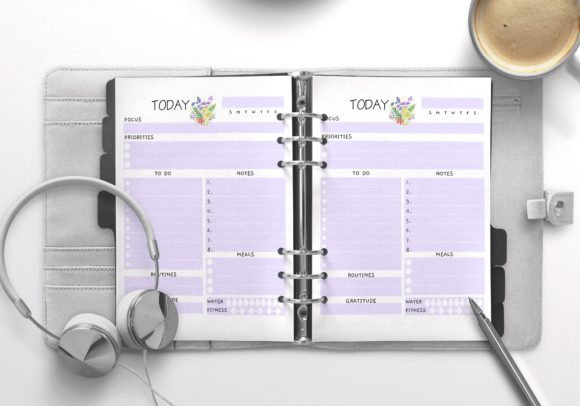
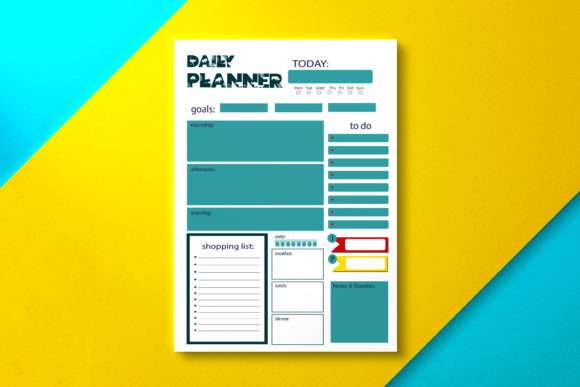
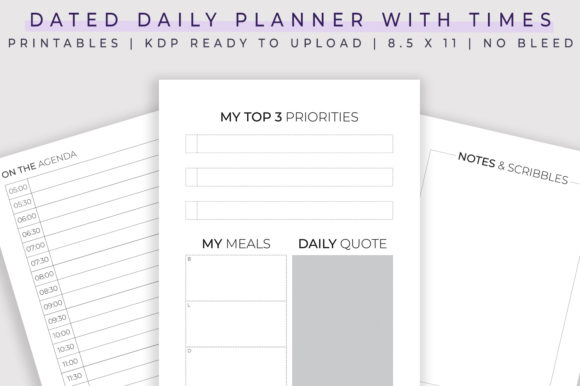
The architecture of a planner dictates its utility. A generic grid often fails because it lacks prompts that guide cognitive processing. The Daily Planner with Times utilizes a two-page spread methodology that transforms passive scheduling into active prioritization. Understanding these components is essential for maximizing the tool’s effectiveness, whether you are using it personally or positioning it for a specific niche audience.
- Time Blocking (5:00 AM – 9:30 PM): This extensive range supports circadian rhythm alignment. Rather than forcing a standard 9-to-5 view, it respects the extended hours many freelancers and parents operate within. This granularity allows for realistic transition times between tasks, reducing the planning fallacy where we underestimate how long activities actually take.
- Top 3 Priorities: Cognitive load theory suggests that decision fatigue sets in when choices are unlimited. By restricting daily focus to three non-negotiable items, this section forces essentialism. It acts as an anchor, ensuring that even if the hourly schedule goes awry, the most critical progress markers are met.
- Nutritional Tracking (B, L, D): Productivity is biological. Including dedicated spaces for Breakfast, Lunch, and Dinner integrates self-care directly into the workflow. This subtle design choice reminds users that fueling the body is a prerequisite for sustaining mental output, preventing the mid-afternoon crash that derails evening plans.
- Daily Quote and Notes: Creativity requires margin. The notes and scribbles section provides low-stakes space for ideation, while the daily quote offers a moment of grounding. These elements prevent the planner from feeling purely utilitarian, adding a layer of inspiration that encourages consistent engagement.
Strategic Applications for Diverse Professionals
Versatility is the hallmark of a sustainable system. While the core structure remains constant, the application of the Daily Planner with Times varies significantly across different professional landscapes. Adapting this tool to specific workflows ensures it remains relevant rather than becoming another abandoned notebook.
For Content Creators and Marketers
Creative work often feels amorphous. Marketers and bloggers can utilize the time-blocking feature to separate deep creative work from administrative maintenance. Use the 5:00 AM to 9:00 AM block for content drafting when cognitive resources are highest. Reserve the "Top 3 Priorities" for campaign milestones rather than individual tasks. The notes section becomes invaluable for capturing fleeting headline ideas or SEO keywords that surface during unrelated tasks, creating a capture system that prevents creative leakage.
For Educators and Academic Professionals
Teaching and research require managing fixed schedules alongside open-ended intellectual work. Educators can map class hours and office appointments in the time slots, while using the priority section for grading goals or curriculum development targets. The meal tracking is particularly crucial for teachers who often skip breaks; making it a visible part of the daily plan validates rest as part of the professional routine. The contact info page at the beginning serves as a quick reference directory for department heads, parent contacts, or research collaborators.
For Entrepreneurs and Small Business Owners
When you wear every hat, context switching is the enemy. Business owners can use this planner to theme their days. Assign specific operational focuses to the Top 3 Priorities (e.g., Finance, Operations, Sales). The extensive time range accommodates the irregular hours of startup life. Furthermore, for those building a publishing business, this planner represents inventory. The included IND and PDF files allow entrepreneurs to launch a product line immediately, diversifying revenue streams while using the same system to manage their own enterprise.
Leveraging the Asset for KDP and Commercial Use
Beyond personal organization, this resource is engineered for commercial viability. For designers and publishers, the technical specifications are as important as the content. The "No Bleed" 8.5 x 11 format is optimized for Amazon KDP standards, eliminating common printing errors that lead to rejected manuscripts or poor customer reviews.
The package includes 101 pages ready for upload, but the true value lies in the modular single files. You receive five single JPGs and five single PDFs alongside the master document. This modularity empowers creators to customize their offerings. Perhaps your audience prefers a 60-day intensive journal rather than a full-year planner. You can curate the page count to fit specific market needs without redesigning from scratch. The inclusion of the Adobe InDesign (IND) file provides ultimate flexibility, allowing experienced designers to adjust fonts, colors, or branding to match an existing product suite.
When marketing this planner, focus on the outcome rather than the features. Highlight the balance of structure and freedom. Emphasize that it is designed for real humans who eat meals, need inspiration, and have priorities beyond their to-do lists. Authenticity resonates with buyers tired of perfectionist productivity systems.
Maintaining Consistency and Originality
A planner only works if it is used. To maintain consistency, integrate the Daily Planner with Times into an existing morning or evening ritual. Do not attempt to fill every time slot immediately. Start by defining the Top 3 Priorities and leaving the rest of the schedule fluid until patterns emerge. This reduces the psychological resistance to planning.
For commercial users, originality is key to standing out in a saturated marketplace. While the interior structure is provided, consider creating unique covers or adding niche-specific introductory pages. If targeting fitness coaches, add a hydration tracker overlay. If targeting writers, include word count goals in the notes section. Use the editable source files to tailor the experience. This customization transforms a generic template into a specialized solution, increasing perceived value and customer satisfaction.
Ultimately, whether used for personal mastery or business growth, this planner represents a commitment to intentional living. It acknowledges that time is finite but malleable. By providing a clear visual representation of the day, it empowers users to move from reactive chaos to proactive design. The combination of practical specs, thoughtful layout, and commercial readiness makes it a foundational tool for anyone serious about optimizing their days and expanding their creative potential.