Dice Sudoku V3: Premium Puzzle Assets
Elevating the quality of activity books and interactive print materials requires more than just logic; it demands crisp visual assets that integrate seamlessly into professional layouts. For graphic designers and self-publishers seeking high-resolution resources, Dice Sudoku - 180 Puzzles Solutions V3 offers a versatile toolkit specifically engineered for modern editorial design. This collection provides a comprehensive suite of ready-to-print elements that streamline production workflows while maintaining superior aesthetic standards across various creative projects.
Technical Specifications for Print Design
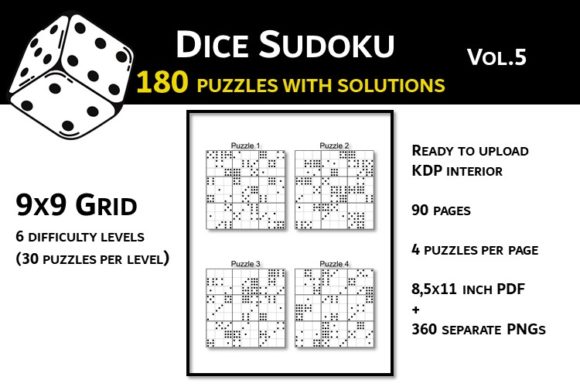
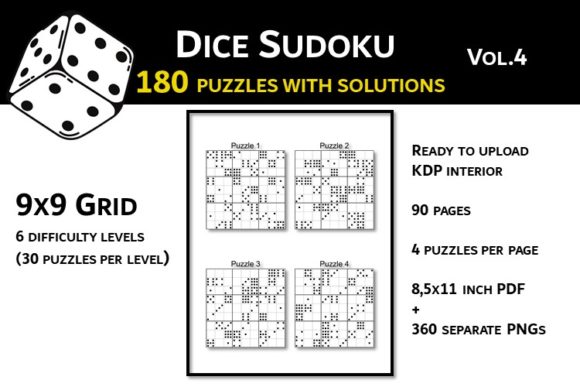
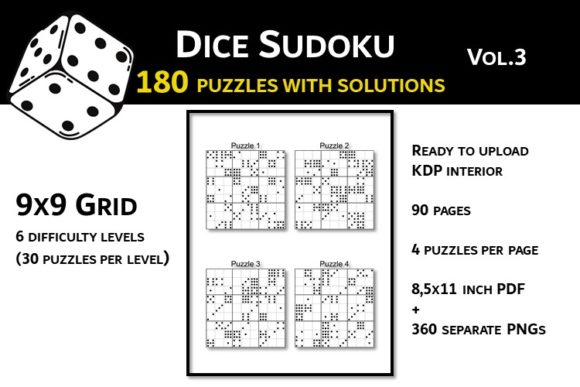
In professional print design, resolution and formatting are non-negotiable. This asset pack addresses common pain points in puzzle book creation by providing 360 separate PNG files alongside a merged PDF. Having individual high-resolution images allows designers to place specific puzzles into custom templates without being locked into a rigid pre-set layout. This flexibility is essential when designing complex editorial spreads or integrating puzzles into broader branding materials where visual hierarchy dictates placement.
The included ready-to-upload PDF serves as an immediate solution for creators needing a complete 90-page book formatted for 8.5″ x 11″ paper. With four puzzles per page and corresponding solution pages, the file adheres to standard publishing margins and bleed requirements. This dual-format approach supports both rapid deployment and bespoke creative customization, ensuring the final product meets industry standards for clarity and readability.
Strategic Applications in Creative Projects
Beyond traditional puzzle books, these structured grid assets serve multiple functions in visual communication and brand identity. The clean, geometric nature of sudoku grids aligns well with modern aesthetics, making them valuable for diverse design applications:
- Editorial Layouts: Use individual PNGs to break up dense text in magazines or newsletters, adding interactive whitespace that improves user engagement and retention.
- Social Media Graphics: Repurpose isolated puzzles as engaging carousel content or stories, leveraging the universal appeal of logic games to boost interaction rates.
- Packaging Design: Incorporate puzzle elements into product packaging for food, toys, or travel accessories to enhance perceived value and extend user experience.
- Merchandise Creation: Apply high-resolution grids to calendars, desk pads, or apparel, creating functional branded items that serve as daily touchpoints.
- Educational Resources: Integrate varying difficulty levels into worksheets or digital learning platforms to support cognitive development content.
Enhancing User Experience Through Difficulty Grading
Effective UX design relies on understanding audience capability and expectations. This collection includes six distinct difficulty levels ranging from very easy to extreme, with 30 puzzles each. From a design perspective, this granularity allows for intentional pacing within a publication. Designers can create visual cues or color-coded sections that guide users through a progressive challenge curve, preventing frustration and maintaining flow.
When incorporating these assets into web design or UI prototypes, the consistent 9x9 grid structure provides a reliable framework for testing interactive states. The clean lines and standardized spacing make it easier to overlay digital interfaces or test typography choices against a structured background. This consistency ensures that whether the end product is physical or digital, the user experience remains intuitive and polished.
Best Practices for Asset Integration
To maximize the impact of these creative assets, designers should evaluate how the puzzle style interacts with existing brand systems. While the provided PNGs are print-ready, consider adjusting opacity or applying brand-specific color palettes to ensure cohesion. When mixing these puzzles with other activity types, maintain uniform stroke weights and margin spacing to preserve professional presentation. Scalability is also key; because the source files are high-resolution PNGs, they can be resized for everything from business card inserts to large-format posters without losing edge definition.
Typography selection plays a crucial role when pairing text with these grids. Choose typefaces that complement the mathematical precision of the sudoku layout rather than competing with it. Sans-serif fonts often work best for instructions and headers, reinforcing the modern, clean aesthetic associated with logic puzzles. By treating these puzzles as integral design elements rather than mere filler content, creators can produce sophisticated materials that resonate with audiences and elevate overall brand perception.
Ultimately, the value of premium creative assets lies in their ability to save time without sacrificing quality. By utilizing professionally formatted resources, designers can focus on innovation and storytelling rather than tedious grid construction. Thoughtful integration of structured visual elements not only enhances aesthetics but also strengthens communication, turning simple activities into memorable brand experiences.