Evaluating 50 Diamond Mazes for KDP Activity Book: A Practical Resource Guide
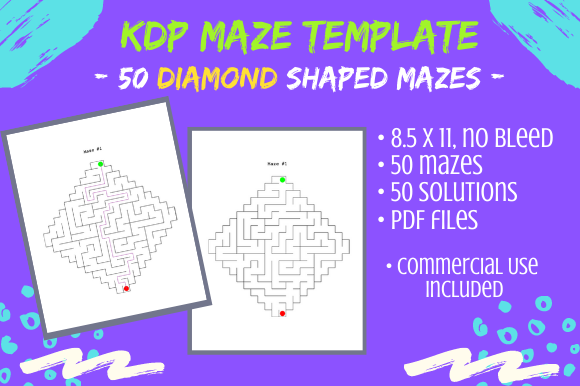
Creating a successful low-content or medium-content book on Amazon KDP often hinges on finding the right balance between production speed and visual uniqueness. For publishers exploring niche puzzle formats, the 50 Diamond Mazes for KDP Activity Book interior offers a specific geometric alternative to standard layouts. This digital resource provides 50 pre-formatted diamond-shaped maze puzzles and their corresponding solutions in an 8.5 x 11-inch, no-bleed PDF format. Unlike generic square or circular mazes, this angular layout utilizes the page margins differently, creating a distinct user experience that can help differentiate a new title in a saturated marketplace.
However, acquiring a pre-made template is only the first step in a viable publishing strategy. Understanding the technical specifications, customization requirements, and strategic fit of this asset is essential for avoiding common pitfalls associated with duplicate content penalties and poor customer reviews. This analysis breaks down where this specific interior fits within a broader KDP portfolio and how to evaluate it against other maze generation tools and assets.
Technical Specifications and Format Compatibility
The primary value proposition of this interior lies in its adherence to strict KDP printing standards. The 8.5 x 11-inch dimension with no bleed is the most versatile trim size for activity books, allowing for cost-effective black-and-white printing while maximizing the drawable area. The "no bleed" specification is particularly relevant for maze books; it ensures that critical puzzle lines do not risk being trimmed off during the binding process, which is a frequent issue with edge-to-edge designs.
The package includes two distinct PDF files: one containing the 50 puzzle pages and another with the 50 solution pages. This separation is standard industry practice, as it allows creators to compile solutions at the back of the book or create a separate answer key booklet without manually extracting pages. Because the file is delivered as a flattened PDF rather than a vector source file (like AI or EPS), editing requires specific workflows. Users intending to modify the mazes must rely on online PDF converters or overlay techniques. This distinguishes the product from software-based generators where parameters can be adjusted instantly. While less flexible for changing difficulty levels algorithmically, the static PDF format ensures that what you see is exactly what will print, eliminating font embedding errors or line weight inconsistencies that sometimes occur when converting between design programs.
Workflow Recommendations for Asset Management
Before beginning any customization, it is strongly recommended to create a duplicate working copy of the original files. Preserving the master file ensures you always have a clean baseline for future projects or recovery if an edit corrupts the layout. Since this is a digital download, there is no physical backup; disciplined file management is the creator's responsibility.
Differentiation Strategies and Duplicate Content Risks
A critical consideration for any KDP publisher using pre-made interiors is Amazon’s duplicate content detection. If multiple sellers upload identical interiors, Amazon may flag the books as repetitive, potentially suppressing visibility or blocking publication. The 50 Diamond Mazes for KDP Activity Book is designed as a foundational layer, not a finished product. To make this template truly your own and mitigate platform risks, significant modification is necessary.
Effective differentiation goes beyond simply changing the title. Publishers should consider the following modifications to create a unique value proposition:
- Structural Remixing: Combine these diamond mazes with other puzzle types such as word searches, sudoku, or cryptograms to create a mixed-activity book rather than a single-format maze book.
- Visual Layering: Add clip art, borders, or thematic backgrounds to transform the stark black-and-white lines into a cohesive aesthetic that matches a specific niche (e.g., gardening, travel, or mindfulness).
- Content Integration: Intersperse quotes, fun facts, or coloring elements between puzzle pages to increase perceived value and alter the pagination structure.
- Title and Metadata Customization: Avoid generic titles like "Diamond Maze Book." Instead, target specific demographics or themes, such as "Geometric Brain Teasers for Seniors" or "Angular Logic Puzzles for Teens."
Treating the 50 pages as a modular component rather than a complete manuscript is the safest approach to long-term account health. This strategy shifts the product from a commodity to a customized creative work.
Comparing Diamond Mazes to Alternative Formats
When selecting puzzle interiors, it is helpful to compare diamond mazes against more traditional options to determine their best application. Standard rectangular mazes are ubiquitous and expected, making them safe but highly competitive. Circular mazes offer novelty but can sometimes waste corner space or present printing challenges near the gutter. Diamond mazes occupy a middle ground that offers specific advantages and tradeoffs.
Advantages of the Diamond Layout
The rotated geometry naturally guides the eye toward the center of the page, creating a focal point that feels intentional and designed. This orientation also maximizes the use of the vertical space on an 8.5 x 11 page, often allowing for larger individual cells compared to a square maze of similar complexity. For adult audiences aged 20–50, who may be seeking stress relief or cognitive maintenance, the non-standard shape provides a subtle psychological break from the grid-like patterns encountered in daily spreadsheets and screens.
Limitations and User Experience Considerations
Conversely, the diamond shape introduces usability constraints. Solving a rotated maze can be physically awkward for some users, as it may require turning the book or adjusting hand positioning. This makes diamond mazes less suitable for very young children or individuals with limited motor control, who typically benefit from stable, horizontal-vertical orientations. Additionally, because the corners of the page remain empty, designers must decide whether to leave that negative space white or fill it with decorative elements. Leaving it blank can make the page look sparse, while overfilling it can distract from the puzzle. This requires more design judgment than a full-page rectangular maze.
Strategic Fit: When to Choose This Interior
The decision to utilize the 50 Diamond Mazes for KDP Activity Book should align with specific publishing goals and audience needs. This resource is particularly well-suited for creators who:
- Are Building Mixed-Format Books: The distinct shape pairs excellently with standard puzzles, providing visual variety that keeps readers engaged throughout a longer activity book.
- Target Adult or Teen Niches: The geometric aesthetic appeals to older demographics looking for modern, abstract brain teasers rather than cartoonish juvenile content.
- Need Rapid Prototyping: For testing a new niche keyword or theme, having 50 ready-to-use pages allows for faster market validation than generating custom mazes from scratch.
- Possess Basic Design Skills: Creators comfortable with adding overlays and rearranging pages will extract significantly more value than those looking for a strictly copy-paste solution.
Conversely, this interior may not be the optimal choice for publishers targeting early learners, large-print seniors requiring high accessibility, or those unwilling to perform any post-processing edits. In those cases, specialized generators or purpose-built interiors with wider paths and standard orientations would likely yield better user satisfaction and review scores.
Evaluating Value Beyond Page Count
When comparing this resource to free alternatives or higher-priced bundles, consider the licensing terms and commercial viability. Many free maze generators restrict commercial use or require attribution, which complicates KDP publishing. Paid interiors like this typically include commercial rights, transferring the legal safety to the buyer. However, the true ROI depends entirely on the level of transformation applied. A book that uses these 50 pages exactly as provided competes directly with every other buyer of the same pack. A book that integrates these mazes into a curated collection of 100+ unique activities creates a defensible asset.
Ultimately, the 50 Diamond Mazes for KDP Activity Book serves as a specialized tool in the low-content publisher’s toolkit. It solves the problem of geometric variety and technical formatting but places the burden of creative differentiation squarely on the user. By understanding its strengths as a modular component and respecting the necessity of customization, publishers can leverage this angular format to build distinctive, compliant, and engaging activity books that stand apart in a crowded category.