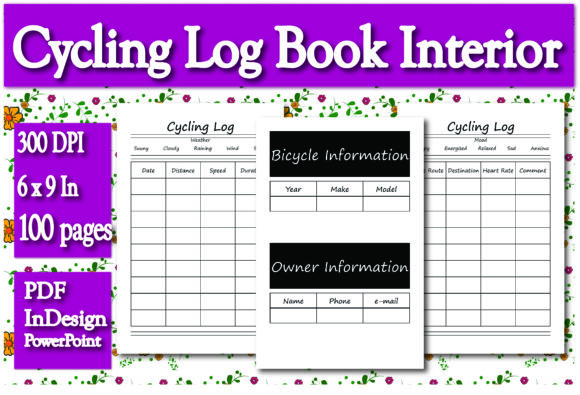
KDP Cycling Log Book Interior: Editable 6x9 Template
Creating a successful low-content book on Amazon KDP requires more than just uploading a generic PDF. It demands a thoughtful interior that solves a specific problem for a niche audience. For cycling enthusiasts, tracking performance is as important as the ride itself. This KDP Cycling Log Book Interior provides a professional foundation for publishers looking to serve this active demographic. Sized at a portable 6 x 9 inches, this template balances comprehensive data tracking with the practical constraints of carrying a logbook on the go. The inclusion of both InDesign and PowerPoint source files transforms this from a static product into a flexible design asset, allowing you to tailor every page to your specific brand or sub-niche.
Strategic Value of Source File Flexibility
The primary advantage of this pack is the dual-format delivery. While the ready-to-upload PDF allows for immediate publishing, the editable files are where the long-term value lies. Most KDP interiors lock you into a single layout, but providing an InDesign file caters to professional designers who demand typographic precision and grid control. You can adjust margins, change font pairings, or restructure the data tables without rebuilding the document from scratch.
For creators who do not own Adobe Creative Cloud, the PowerPoint file serves as an accessible alternative. This lowers the barrier to entry for marketers, bloggers, and hobbyists who want to customize their products without learning complex design software. You can easily modify headers, add branding elements, or translate text for international markets. This adaptability ensures your cycling log book does not look identical to competitors using the same base template. Customization is the key to building a recognizable series and establishing authority in the fitness journal category.
Anatomy of a Functional Cycling Tracker
A log book fails if it feels like a chore to complete after a long ride. This 100-page interior is structured to capture essential metrics without overwhelming the user. The layout prioritizes speed and clarity, recognizing that cyclists often fill out logs while fatigued or in varying light conditions.
- Bicycle and Owner Information: Dedicated front-matter sections allow users to record bike specifications and personal contact details. This is crucial for multi-bike households or riders who travel with their equipment.
- Core Performance Metrics: Fields for Date, Distance, Speed, Duration, and Heart Rate form the quantitative backbone of the log. These are arranged linearly to facilitate quick entry and later data analysis.
- Route and Destination: Space for mapping out rides helps users remember favorite loops or plan future adventures. This adds a narrative element to the raw data.
- Qualitative Tracking: Sections for Weather, Mood, and Comments acknowledge that cycling is a holistic experience. Recording how a ride felt is often as valuable as recording how fast it was.
This combination of hard data and subjective experience makes the interior suitable for a wide range of cyclists, from data-driven athletes training for events to recreational riders documenting scenic tours.
Adapting the Interior for Specific Niches
The true power of an editable KDP Cycling Log Book Interior lies in its potential for specialization. Generic journals face stiff competition, but targeted variations can dominate smaller search results. By modifying the source files, you can create distinct products for different segments of the cycling community.
Road Cyclists and Racers: Adjust the fields to include cadence, elevation gain, and gear ratios. You might replace the "Mood" section with "Nutrition/Hydration" or "Recovery Notes." The aesthetic could be shifted toward clean, minimalist lines that appeal to performance-focused athletes.
Gravel and Adventure Riders: Expand the "Route" section to include surface type and waypoint notes. Add fields for gear checks or mechanical issues. A rugged, textured background or hand-drawn icons in the PowerPoint file could better resonate with this off-road demographic.
Commuters and Urban Cyclists: Simplify the performance metrics and focus on consistency. Add trackers for carbon savings, cost comparisons against driving, or safety observations. This variation appeals to eco-conscious consumers and urban planners rather than competitive athletes.
Touring and Travel: Transform the log into a travel diary. Increase space for "Comments" and "Destination," and add sections for accommodation, points of interest, and daily expenses. This shifts the product from a training tool to a memoir keeper.
Maintaining Design Consistency and Usability
When customizing the InDesign or PowerPoint files, maintain strict attention to usability. A 6 x 9 trim size offers limited real estate, so white space is functional, not decorative. Ensure that writing areas have adequate line spacing for handwriting; cramped lines frustrate users and lead to abandoned journals. Test print a sample page to verify that ink coverage is appropriate for standard KDP paper stock. Heavy graphics or solid black backgrounds can cause bleed-through, ruining the user experience.
Typography choices should prioritize legibility over style. Sans-serif fonts generally work best for data tables and small labels, while a subtle serif or script can be used sparingly for section headers to add character. Always keep binding margins in mind when adjusting layouts; nothing destroys a log book faster than content disappearing into the gutter. The provided templates are pre-set for safe zones, but significant customization requires re-checking these parameters.
Marketing Through Practical Utility
When listing your customized version of this KDP Cycling Log Book Interior, focus on the specific problems your variation solves. Avoid generic descriptions like "great gift for cyclists." Instead, highlight the unique adaptations you made. If you created a gravel-specific version, mention the surface tracking and gear checklists. If you designed a commuter edition, emphasize the sustainability tracking and compact size.
Use the "Look Inside" feature to demonstrate the flow of the interior. Show potential buyers exactly where they will record heart rate, weather, and mood. Transparency builds trust. Explain why you chose specific fields and how they benefit the rider. This educational approach positions you as a knowledgeable publisher rather than a generic content farm.
Consider bundling the physical book with digital resources if you have the capability. A QR code inside the cover linking to a downloadable spreadsheet template or a route planning guide adds immense perceived value. This bridges the gap between analog logging and digital analysis, catering to modern users who appreciate hybrid workflows.
Long-Term Portfolio Strategy
Treat this 100-page template as a scalable asset. Once you master the customization workflow in InDesign or PowerPoint, you can efficiently produce seasonal variations, yearly editions, or companion volumes. A "Winter Training Log" might focus more on indoor trainer metrics and strength work, while a "Summer Touring Journal" emphasizes distance and exploration.
Consistency across your catalog builds brand recognition. Use similar typography, layout grids, and cover design languages even as the internal content shifts. This encourages repeat purchases from satisfied customers who trust your format. The initial investment in learning to manipulate the source files pays dividends through faster production times and higher quality outputs.
Ultimately, the success of a KDP Cycling Log Book Interior depends on respecting the end user's time and passion. Cyclists are detail-oriented people who appreciate well-engineered tools. By leveraging the flexibility of editable source files to create purposeful, niche-specific trackers, you move beyond commodity publishing. You provide genuine utility that supports their journey, whether that journey is measured in watts and kilometers or in sunsets and scenic detours. The template is merely the starting point; your insight into the cyclist's mindset is what creates a product worth buying and using.