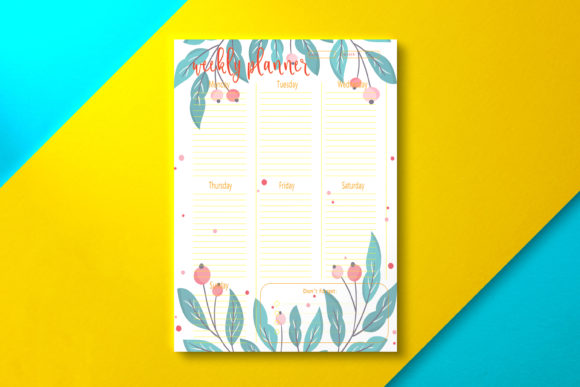
Weekly Planner Berry: Versatile PDF Templates
Effective time management often hinges on having the right tools, but finding a planner layout that balances structure with flexibility can be surprisingly difficult. The Weekly Planner Berry collection addresses this specific friction point by offering a comprehensive suite of pre-formatted templates designed for immediate use. Whether you are managing a bustling household, coordinating client projects, or building a low-content publishing business, these files provide a streamlined foundation. The system includes distinct variations for Letter, Half Letter, A4, and A5 sizes, all featuring a refined green and red color scheme that aids in visual organization without overwhelming the user.
What sets this particular asset apart is its dual-purpose nature. It serves equally well as a personal productivity tool and a commercial-ready product file. For professionals and creators, this means you stop wasting hours designing grids and start focusing on actual planning or product development. The inclusion of both single-page layouts and a 50-page compiled document specifically formatted for KDP upload demonstrates an understanding of modern digital workflows. It bridges the gap between personal utility and entrepreneurial opportunity, making it a practical resource for a wide demographic ranging from educators to freelance marketers.
Strategic Design and Visual Hierarchy
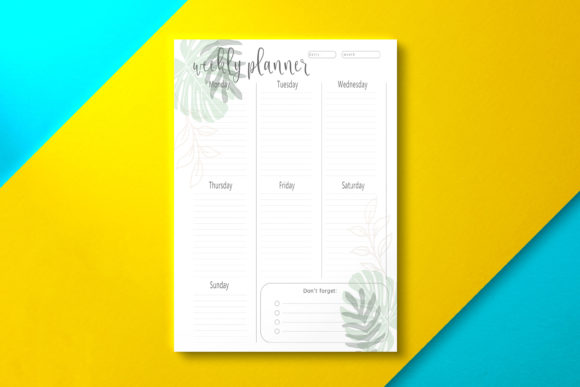
The aesthetic choices in the Weekly Planner Berry templates are functional rather than purely decorative. The interplay of green and red serves a cognitive purpose. In planning contexts, color coding is essential for rapid information processing. Green often signifies growth, scheduled tasks, or positive confirmation, while red can highlight deadlines, urgent priorities, or financial tracking. This built-in visual hierarchy reduces the mental load required to scan a page. Users can instantly distinguish between different categories of information without needing to read every line of text.
Beyond color, the typography and spacing have been optimized for readability across different print sizes. A common failure in generic planner templates is that they look great on a screen but become illegible when scaled down to A5 or Half Letter. These files maintain proportional integrity. The writing spaces are generous enough for handwriting yet structured enough for digital annotation on tablets. This attention to detail ensures that the planner remains usable whether printed on standard office paper or bound into a premium notebook.
Multi-Format Flexibility for Diverse Workflows
One size rarely fits all in productivity, which is why the availability of four distinct paper standards is critical. Each format serves a specific segment of the user base:
- Letter Size (8.5 x 11): Ideal for desk-bound professionals, teachers, and project managers who need maximum writing space. This format works exceptionally well as a clipboard planner or a desktop reference sheet where detailed notes and expansive to-do lists are necessary.
- Half Letter (5.5 x 8.5): The sweet spot for portability and utility. Popular among travelers and commuters, this size fits easily into bags while still offering sufficient room for daily tracking. It is also a preferred trim size for many independent publishers creating compact journals.
- A4 (210 x 297 mm): The international standard for business and education. Essential for users outside North America or those working in corporate environments where A4 is the mandatory filing size. It provides a familiar canvas for global teams and students.
- A5 (148 x 210 mm): The quintessential journal size. Perfect for bullet journalists, creatives, and individuals who prefer a planner that feels like a book rather than a document. Its compact footprint encourages consistent carry and frequent check-ins throughout the day.
Having access to all four formats within a single product ecosystem eliminates the need to resize or reformat designs manually. This saves significant technical overhead, particularly for those who may want to test different sizes before committing to a specific printing method or binding style.
Commercial Applications and KDP Readiness
For entrepreneurs, bloggers, and self-publishers, the value proposition extends beyond personal use. The Weekly Planner Berry package includes a 50-page compiled PDF specifically prepared for Amazon KDP and similar print-on-demand platforms. This "ready commercial use" designation implies that the interior margins, bleed settings, and resolution meet industry standards for publication. Creating a compliant planner interior from scratch can take dozens of hours; having a verified template accelerates time-to-market significantly.
Publishers can utilize these files as a base for niche-specific planners. A fitness coach could add workout tracking sections to the existing weekly grid, or a financial advisor could overlay budget categories onto the red-accented areas. Because the core structure is already professionally laid out, creators can focus their energy on adding unique value propositions rather than wrestling with alignment guides. This efficiency is crucial in competitive markets where speed and quality determine success.
Furthermore, digital product sellers can offer the individual 1-page files as standalone downloads or bundle them with other stationery assets. The clean, professional aesthetic appeals to a broad audience, reducing the risk of niche alienation. When selling digital planners, providing multiple size options increases the perceived value and utility of the product, potentially leading to higher conversion rates and fewer customer support inquiries regarding formatting.
Enhancing Personal and Professional Productivity
While the commercial aspects are robust, the primary function remains effective weekly planning. Structuring a week requires more than just listing tasks; it demands a framework that supports prioritization and reflection. The Weekly Planner Berry layout facilitates this by providing clear boundaries for time blocking and goal setting. The consistent structure helps build a planning habit, as users know exactly where to record appointments, deadlines, and notes each time they open the document.
In professional settings, these planners can serve as communication tools. A marketing team might use the Letter size version during sprint planning meetings to visualize campaign timelines. Educators can use the A4 format to map out lesson plans and grading schedules. Freelancers often find that a physical or printable planner helps separate work from personal life, especially when working remotely. The act of writing down commitments in a dedicated space reinforces accountability in ways that digital notifications often fail to achieve.
Evaluating Fit and Implementation
Before integrating any new planning system, it is important to assess your specific needs against the product's capabilities. Consider your primary environment: if you are predominantly mobile, the A5 or Half Letter versions will likely see more usage than the larger formats. If you plan to publish, verify that the trim size matches your target market's preferences. While the KDP-ready file is convenient, always order a proof copy to check margin safety and color reproduction, as screen displays can differ from physical print output.
For those using the files digitally, ensure your annotation software supports the specific dimensions. Some tablet apps handle standard sizes better than custom dimensions. Testing the workflow with the single-page file before committing to the full 50-page version can prevent frustration. Additionally, consider how the green and red color scheme aligns with your personal or brand aesthetics. While versatile, strong colors should complement rather than clash with any additional stickers, stamps, or overlays you intend to use.
Ultimately, the Weekly Planner Berry collection represents a pragmatic solution to the chaos of scheduling. It removes the barrier of design and formatting, allowing users to engage immediately with the practice of organized living and efficient business operations. Whether utilized as a private organizational aid or a foundational asset for a publishing venture, its strength lies in its adaptability and professional execution. By leveraging such specialized resources, individuals and businesses can reclaim time previously lost to setup and maintenance, directing that energy toward meaningful progress and creative growth.