English Lesson Plan PDF: Selecting the Right Format for KDP and Classroom Success
Creating or purchasing an English Lesson Plan PDF is often the first step toward organized teaching or launching a low-content publishing business. Whether you are an ESL tutor preparing for next week’s classes or an entrepreneur building a portfolio of educational resources for Amazon KDP, the utility of your material depends entirely on technical precision. A lesson plan is more than just content; it is a functional tool that must fit specific physical and digital constraints. When these constraints are ignored, even the most brilliant pedagogical strategies become unusable.
Many educators and creators underestimate the importance of trim size compatibility. They assume that a standard document can simply be resized or cropped to fit different formats like Letter, Half Letter, A4, A5, or 6×9. This assumption is the primary cause of wasted time, rejected uploads, and frustrated end-users. Understanding the distinct requirements for each size ensures your English Lesson Plan PDF serves its intended purpose without requiring constant reformatting.
The Critical Distinction Between International and Regional Standards
One of the most frequent oversights involves confusing international paper standards with North American sizes. If you are creating a 1-page English Lesson Plan Letter size document, you are working with 8.5 x 11 inches. However, if you intend to sell or use this globally, you must also account for A4 (210 x 297 mm). While these two sizes appear similar, they have different aspect ratios.
Designing solely for Letter size and then attempting to convert to A4 later often results in awkward white space at the bottom or top margins, or worse, text being cut off during printing. Conversely, designing for A4 and printing on Letter paper creates scaling issues that make handwriting lines too small or margins unprintable. The practical solution is to create separate master files for each standard rather than relying on automatic conversion software. For KDP creators, offering both versions significantly expands your potential market, as European and Asian buyers typically require A4, while North American customers expect Letter.
Navigating Compact Formats: Half Letter, A5, and 6×9
Smaller formats present unique layout challenges that differ vastly from full-page documents. A 1-page English Lesson Plan Half Letter (5.5 x 8.5 inches) or A5 (148 x 210 mm) is popular for portable teacher planners and student workbooks. The mistake many designers make here is simply shrinking a full-size template. When you reduce a Letter-sized lesson plan by 50%, font sizes often drop below 10pt, making the text difficult to read and nearly impossible to write within.
Compact formats require a complete redesign of the information hierarchy. Instead of cramming ten sections onto a small page, effective 6×9 or A5 templates prioritize essential fields. You might need to remove decorative borders or reduce the number of writing lines to maintain usability. For KDP users, this distinction is vital. A 6×9 book is a common trim size for journals, but if the interior content was originally designed for 8.5 x 11, the resulting product will look amateurish and receive negative reviews regarding readability. Always design specifically for the target trim size, adjusting line spacing and font weight to accommodate the reduced real estate.
Technical Pitfalls in Ready KDP Upload Files
For entrepreneurs and freelancers using these templates for Amazon KDP, "Ready KDP upload" implies a file that meets strict manufacturing specifications. However, many downloadable products labeled as such fail basic quality checks. The most common technical failure is incorrect bleed settings. If your English Lesson Plan PDF includes elements that extend to the edge of the page, such as colored headers or sidebar graphics, you must include bleed area (typically 0.125 inches on three sides for KDP).
Uploading a file without proper bleed results in white borders appearing where color should be, or critical content being trimmed off entirely. Another frequent issue is margin safety. Text placed too close to the gutter (the inner binding edge) becomes unreadable once the book is bound. A 1-page English Lesson Plan A4 or Letter file intended for digital download has different margin requirements than one intended for print. Digital files can utilize the entire page, whereas print-ready KDP files must respect safe zones. Always verify the specific margin calculator for your chosen trim size before finalizing your PDF.
Evaluating Usability Over Aesthetics
When selecting or designing an English Lesson Plan PDF, there is a tendency to prioritize visual appeal over functional layout. Intricate backgrounds, dark colors, and heavy graphics may look attractive on a screen, but they often fail in practical application. Teachers printing these plans at home or school do not want to waste ink on decorative elements. Furthermore, high-contrast designs can obscure writing space.
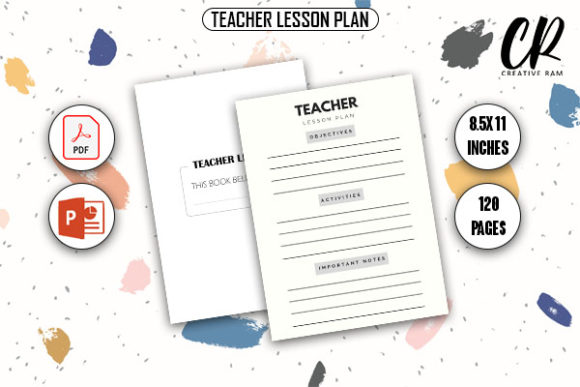
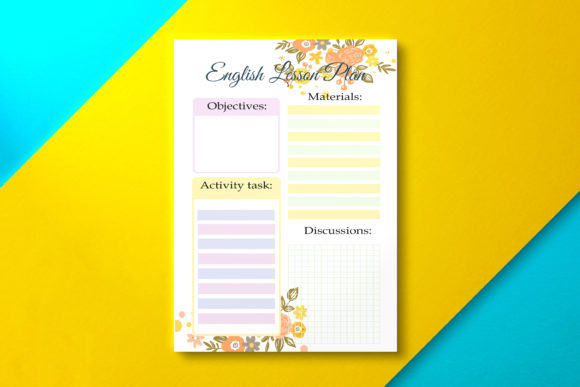
A better approach focuses on clean, minimalist structures that facilitate quick note-taking. Ensure that input fields have adequate height for handwriting. A common error in digital-to-print templates is providing lines that are spaced for typed text (single spacing) rather than handwritten notes (wide ruling or college ruling). Before committing to a template, print a test page at actual size. Write in it with your preferred pen. If you find yourself struggling to stay within the lines or running out of space for standard lesson components like objectives, materials, and assessment, the design is flawed regardless of how beautiful it looks digitally.
Strategic Selection for Educators and Entrepreneurs
Your decision-making process should align with your end goal. If you are an educator seeking personal organization, identify which binder or planner system you currently use. Buying a 6×9 lesson plan when you use a standard Letter-size binder renders the purchase useless. Compatibility with existing organizational systems is more important than standalone design quality.
For KDP creators and digital product sellers, diversity in sizing is a competitive advantage. Offering a bundle that includes 1-page English Lesson Plan Letter, Half Letter, A4, A5, and 6×9 variations caters to a broader audience. However, accuracy is paramount. Clearly label each file in your product description and zip folders. Mislabeling a Half Letter file as A5 is a subtle error that causes significant customer dissatisfaction due to the millimeter-level difference in dimensions.
- Verify Dimensions: Never assume size based on file names. Open the PDF properties to confirm exact width and height before uploading or printing.
- Check Font Licensing: If you are selling KDP books or digital downloads, ensure the fonts used in the English Lesson Plan PDF allow for commercial use and embedding.
- Test Print Margins: Home printers often have non-printable areas larger than commercial KDP presses. Provide a "home printer friendly" version with wider margins if targeting individual teachers.
- Validate Hyperlinks: If your digital lesson plan includes links to external resources, test every single one. Broken links in a static PDF degrade trust and perceived value.
Ultimately, the value of an English Lesson Plan PDF lies in its seamless integration into your workflow or product line. By paying attention to regional sizing standards, respecting print specifications, and prioritizing functional design over decoration, you avoid the frustration of unusable files. Whether you are managing a classroom or a publishing business, precision in preparation leads to professional results and long-term satisfaction.