Hexagonal Grid Paper Letter Gray: Creative & Commercial Uses
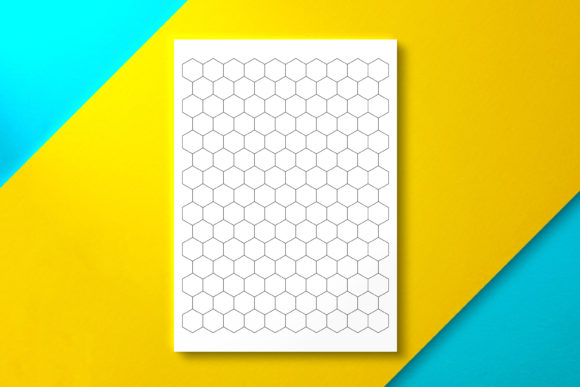
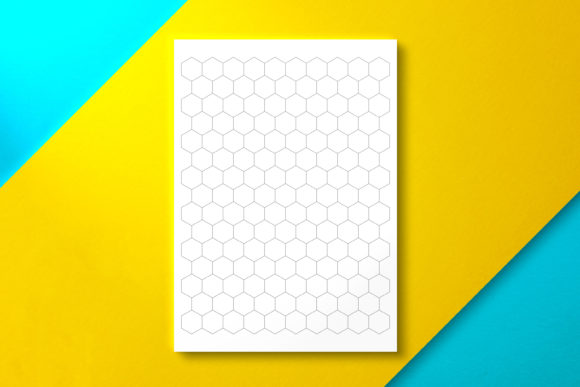
There is a distinct cognitive shift that happens when you move from square graph paper to a hexagonal layout. While traditional grids enforce rigid, orthogonal thinking, Hexagonal Grid Paper Letter Gray invites organic connection, radial planning, and non-linear exploration. For creators, designers, and entrepreneurs, this specific format—Letter size (8.5x11) with a subtle gray tone—is not just stationery; it is a strategic tool for visualizing complex systems without the visual noise of high-contrast black lines.
The utility of this resource lies in its versatility and immediate readiness. Whether you are prototyping a board game, designing organic chemistry diagrams, or creating low-content books for Amazon KDP, having a pre-formatted, commercial-ready PDF eliminates hours of technical setup. The soft gray grid provides necessary structure while remaining unobtrusive, allowing your ink, digital overlays, or handwritten notes to take center stage. This balance makes it an essential asset for professionals who value both aesthetics and function.
Why Hexagons Change Your Creative Process
Squares imply hierarchy and separation. Hexagons imply equality and interconnection. When you utilize hexagonal grid paper, you are leveraging a geometric structure found in nature, from honeycombs to basalt columns. This biological familiarity makes hex grids exceptionally effective for brainstorming sessions where ideas need to relate to one another fluidly rather than sequentially.
For educators and trainers, this format supports concept mapping that mimics neural pathways. Instead of forcing information into top-down lists, students can cluster related concepts around a central node, expanding outward in six directions. The 1cm size is particularly effective for detailed note-taking and academic diagrams, offering enough resolution for precision without feeling cramped. Conversely, the 2cm variation opens up space for broader ideation, making it ideal for workshop facilitators who need participants to write legibly within cells during collaborative exercises.
Strategic Applications for Designers and Marketers
Creative professionals often struggle with the "blank page" syndrome or the rigidity of standard templates. Hexagonal Grid Paper Letter Gray serves as a middle ground. It offers constraint without confinement.
- User Experience (UX) Mapping: Modern user journeys are rarely linear. Use the 2cm grid to map out touchpoints, pain points, and opportunities in a radial format that better reflects actual customer behavior.
- Brand Architecture: Visualize how different brand pillars support one another. The interconnected nature of hexagons helps identify gaps in messaging or product ecosystems that vertical lists might miss.
- Mood Boarding and Color Theory: The gray tone of the grid acts as a neutral mid-tone background, making it easier to evaluate color swatches and texture combinations without white glare or black interference.
- Game Design Prototyping: For tabletop game designers, hex grids are the industry standard for movement and terrain. Having printable Letter-sized sheets allows for rapid playtesting of mechanics before committing to digital design software.
Optimizing for Amazon KDP and Commercial Publishing
For publishers and self-publishers, time is inventory. The "Ready KDP upload" specification of these files addresses the most common friction point in low-content book creation: formatting errors. These PDFs are sized precisely to Letter dimensions (8.5x11 inches), ensuring they meet Amazon’s strict trim size requirements without unexpected cropping or margin issues.
The gray grid color is a deliberate production choice. High-contrast black grids can sometimes appear too heavy in print, competing with user content or making the page feel cluttered. A gray grid prints softly, providing guidance that enhances usability without dominating the page. This subtlety increases the perceived value of the final product, distinguishing it from generic, mass-produced alternatives.
Leveraging the Included File Variations
The product suite includes four distinct files, each serving a specific phase of the publishing or creative workflow. Understanding how to deploy each ensures maximum efficiency.
- 1-Page Hexagonal Grid Letter 1cm: Use this for proofing and cover design mockups. Before committing to a 100-page interior, test how your title typography interacts with the smaller grid density. This file is also perfect for creating single-sheet handouts or digital downloads for Etsy.
- 1-Page Hexagonal Grid Letter 2cm: Ideal for testing larger formats intended for journals aimed at seniors, children, or users with motor control considerations. The larger cells accommodate thicker markers and provide a more accessible writing experience.
- 100 Pages Hexagonal Grid 1cm: This is your primary manuscript file for technical notebooks, engineering logs, or dense sketchbooks. Because it is pre-paginated and formatted, you can upload directly to KDP or use it as a base layer in InDesign or Affinity Publisher to add custom headers and footers.
- 100 Pages Hexagonal Grid 2cm: Best suited for idea journals, planners, and creative prompt books. The spacious layout encourages expansive thinking and is less intimidating for users who find tight grids restrictive.
Practical Tips for Maintaining Quality and Originality
While ready-made templates save time, successful commercial products require differentiation. Simply uploading a blank grid is rarely enough to capture a specific audience. You must adapt the foundation to serve a niche.
Contextualize the Grid: Add value by incorporating prompts, instructional overlays, or themed sections. A hex grid becomes a "Molecular Gastronomy Planner" when paired with recipe fields, or a "Campaign Strategy Workbook" when annotated with marketing frameworks. The grid is the canvas; your expertise provides the paint.
Maintain Visual Hierarchy: When adding custom elements to the gray grid, ensure your additions have sufficient contrast. Since the base is gray, use solid blacks or bold accent colors for your text and icons. Avoid using light grays or pastels for critical information, as they may vibrate against the grid or disappear in low-quality printing.
Test Print Before Publishing: Always order a physical proof. Screen calibration differs significantly from offset or POD printing. Verify that the gray tone reads as a helpful guide rather than a smudge, and confirm that the 1cm and 2cm measurements translate accurately to the physical page. This step prevents negative reviews regarding usability.
Expanding Beyond Paper: Digital and Hybrid Workflows
In an increasingly hybrid work environment, Hexagonal Grid Paper Letter Gray bridges the analog-digital divide. Creators can import these PDFs into tablet apps like GoodNotes, Notability, or Procreate as background templates. The gray color reduces eye strain during long digital sessions compared to stark white backgrounds.
For bloggers and content marketers, these grids serve as excellent social media assets. Sketch a process diagram on the hex grid, photograph it with natural lighting, and share it as an authentic, behind-the-scenes look at your workflow. This type of content performs well because it signals effort and thoughtfulness in an era of AI-generated imagery. The tactile quality of the gray grid communicates professionalism and grounded creativity.
Making the Most of Your Creative Assets
Ultimately, the value of Hexagonal Grid Paper Letter Gray is defined by how you apply it. It is a foundational element that supports clarity, organization, and innovative thinking across disciplines. By selecting the appropriate grid size for your specific goal—1cm for precision, 2cm for exploration—and utilizing the commercial-ready files responsibly, you streamline the path from concept to tangible product.
Whether you are building a passive income stream through KDP, facilitating a high-stakes strategy session, or simply seeking a better way to organize your own thoughts, this tool removes technical barriers. It allows you to focus on what matters most: the connections between ideas and the quality of the work you produce. Embrace the hexagon not just as a shape, but as a methodology for more connected, effective creation.