Write and Draw KDP Interior: 3 Tested Designs
Creating a low-content or medium-content book for Amazon KDP often stalls at the interior design phase. While generating a cover is an exciting creative burst, formatting 120 pages of consistent, functional layouts can be tedious and technically demanding. The Write and Draw KDP Interior - 3 Designs package addresses this specific bottleneck by providing pre-formatted, tested templates that bridge the gap between blank notebooks and structured journals. This resource is not merely a collection of PDFs; it is a production-ready foundation designed to streamline the publishing workflow for creators who value speed without sacrificing professional quality.
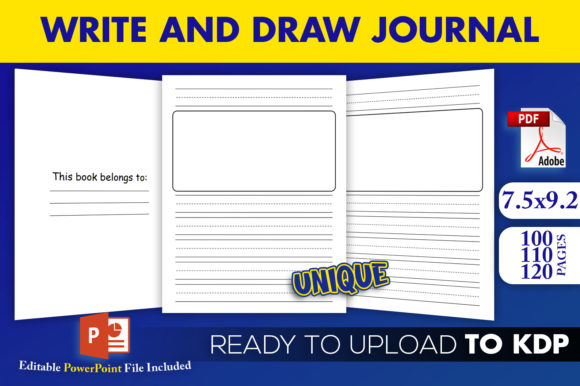
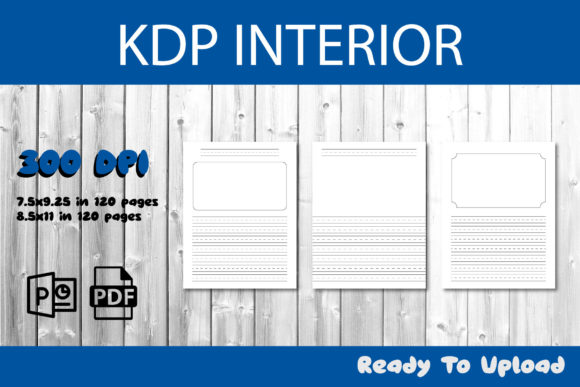
At its core, this asset provides interiors in two industry-standard trim sizes: 8.5x11 inches and 7.5x9.25 inches. Each file includes 120 pages of black and white content with bleed settings already configured. Crucially, the package includes both PowerPoint and PDF files, offering flexibility for users who want to customize the layout versus those who need immediate upload readiness. The inclusion of a coordinating title page ensures the inside of the book matches the structural integrity of the interior, eliminating the jarring transition that often occurs when creators piece together disparate free resources.
Different Priorities for Different Creators
The value of a pre-made interior shifts dramatically depending on where you are in your publishing journey. A hobbyist looking to create a single gift for a family member has fundamentally different needs than a full-time self-publisher managing a catalog of fifty titles. Understanding these distinctions helps determine if this specific three-design bundle aligns with your current objectives.
Beginners and Hobbyists: Reducing Technical Friction
For those new to KDP, the primary barrier is often technical anxiety rather than creative lack. Questions about bleed margins, safe zones, and gutter spacing can paralyze progress. Beginners typically prioritize reliability and ease of use over extensive customization. For this group, the Write and Draw KDP Interior - 3 Designs serves as a safety net. Because the files are tested, new publishers can bypass the trial-and-error phase of formatting.
The availability of PowerPoint files is particularly significant for this audience. Many beginners are already familiar with presentation software but intimidated by professional design tools like Adobe InDesign or Affinity Publisher. Being able to open a PPT file, tweak a font, or adjust a line weight using familiar interface controls lowers the learning curve substantially. It transforms interior creation from a technical hurdle into a manageable editing task, allowing the creator to focus on selecting a niche and designing a cover rather than wrestling with print specifications.
Professional Publishers: Scalability and Asset Management
Experienced KDP publishers evaluate assets through the lens of return on investment and time efficiency. For professionals, the cost of a template is negligible compared to the hours saved in formatting. However, their priority is flexibility and commercial viability. They need to know that the interior can be adapted quickly to fit different sub-niches without looking generic.
This demographic often uses the provided PDF files for rapid deployment when testing new keywords or niches. If a specific "write and draw" concept validates in the market, they can then utilize the PowerPoint source files to create proprietary variations, ensuring long-term uniqueness. The dual-size offering (8.5x11 and 7.5x9.25) also supports portfolio diversification. Professionals understand that certain demographics prefer larger formats for educational activities, while others prefer portable sizes for travel journaling. Having both sizes ready allows for A/B testing trim preferences without additional design overhead.
Educators and Coaches: Functional Utility Over Aesthetics
Teachers, therapists, and coaches approach write-and-draw books as tools rather than products. Their evaluation criteria center on pedagogical effectiveness and user experience. Does the writing space accommodate different handwriting sizes? Is the drawing area proportionate to the prompt? Is the paper usage efficient?
For educators creating supplementary materials or workbooks for students, the 8.5x11 format in this bundle offers ample real estate for lesson integration. The structured nature of "write and draw" prompts supports literacy development and emotional expression in younger learners. Conversely, life coaches or art therapists might prefer the 7.5x9.25 size for client journals, where a more intimate, handheld feel encourages regular engagement. The coordinating title page adds a layer of professionalism that signals to clients or students that the material is curated and intentional, rather than hastily assembled.
Evaluating Quality and Practical Application
Beyond audience-specific needs, there are universal factors to consider when integrating this interior into your workflow. The distinction between "interior only" and a complete book solution is vital. You must create your own cover, which means the interior acts as a canvas awaiting external context. This separation is actually beneficial for SEO and branding, as it prevents your book from looking identical to others using the same template.
The Importance of Bleed and Trim Accuracy
One of the most common reasons for KDP rejection or poor customer reviews is improper margin setup. Elements that get cut off during printing or text that disappears into the binding ruin the user experience. The fact that these designs come with bleed already applied is a critical quality indicator. When evaluating any pre-made interior, always verify the bleed settings against current KDP guidelines. Since this package is marketed as tested, it reduces the risk of manufacturing errors, but prudent creators should still download the proof copy or use the KDP previewer before final publication.
Customization vs. Speed Trade-offs
Users must decide how much modification is necessary. The six PowerPoint files allow for deep customization, such as adding branded headers, changing prompt fonts, or inserting logo watermarks. However, modifying master slides requires attention to detail to maintain alignment across 120 pages. If your goal is pure speed, the PDF route is superior. If your goal is brand building, the PPT route is essential.
Consider the "write and draw" balance. Some niches require 70% writing space and 30% drawing space, while others are reversed. Before purchasing, assess whether the three included designs match the cognitive load of your target reader. A mindfulness journal for adults might need expansive drawing areas for abstract expression, whereas a vocabulary builder for children needs structured lines for tracing and small boxes for illustrations. Matching the template's ratio to your content strategy prevents the need for heavy post-purchase editing.
Making the Right Choice for Your Project
Ultimately, the decision to use Write and Draw KDP Interior - 3 Designs depends on your current resource allocation. If you have strong design skills but limited time, this asset buys back hours of repetitive layout work. If you have limited design skills but high creative ambition, it provides a professional scaffold upon which to build. If you are an educator or service provider, it offers a standardized format that lends credibility to your methodology.
However, if your project requires highly specialized layouts—such as musical notation, complex graphing, or non-standard aspect ratios—a generic write-and-draw template may not suffice. Similarly, if you are building a premium brand where every element must be bespoke, you might use these files only for initial prototyping before commissioning custom work.
For the vast majority of low-to-medium content creators, this bundle represents a pragmatic middle ground. It eliminates the technical risks of DIY formatting while preserving enough flexibility to create distinct, marketable products. By leveraging tested dimensions and coordinated title pages, creators can shift their energy away from pixel-pushing and toward the strategic aspects of publishing: keyword research, cover design, and audience connection. Whether you are launching your first journal or expanding an existing series, having reliable, scalable interiors is foundational to sustainable self-publishing success.