Write and Draw Kids Journal KDP Interior Guide
Creating a successful low-content book on Amazon requires more than just a catchy cover; the interior experience determines whether a customer leaves a five-star review or returns the product. The Write and Draw Kids Journal KDP Interior is designed to bridge the gap between creative expression and structured writing for young users. This specific template package provides a balanced layout that encourages children to articulate their thoughts through both text and illustration, making it a versatile tool for various publishing goals. Whether you are launching your first KDP title or expanding an existing catalog, understanding the practical application of these interiors is essential for long-term success.
Understanding the Technical Specifications
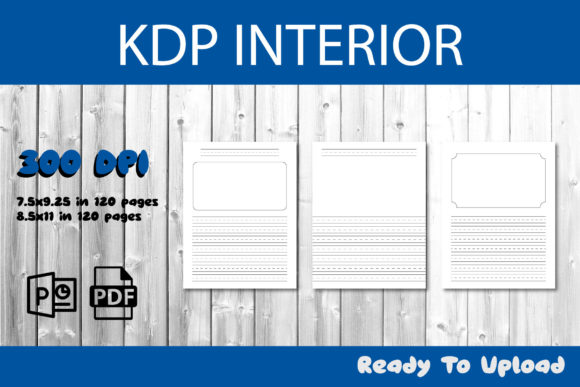
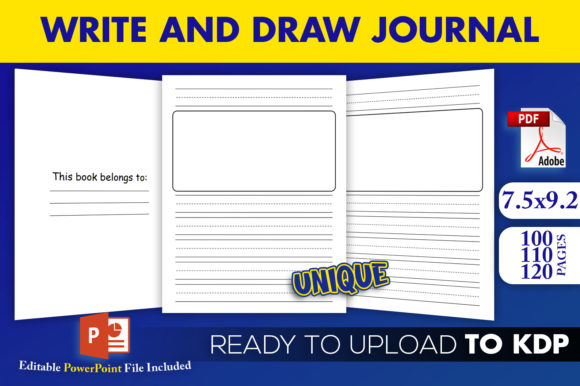
Before evaluating the creative potential, it is necessary to understand the technical foundation of this asset. The trim size is set to 7.5x9.25 inches, a dimension that sits comfortably between standard trade paperbacks and larger workbooks. This size offers ample canvas space for drawing without being cumbersome for small hands to hold or carry. The package includes high-resolution interiors across three distinct page counts: 100, 110, and 120 pages. This variation allows publishers to test different price points and royalty margins without redesigning the core content.
Crucially, the files have been tested on KDP to ensure they meet current printing standards. Margins, bleed areas, and safe zones are pre-configured, which significantly reduces the risk of rejection during the upload process. For creators who have faced formatting errors in the past, this reliability transforms the publishing workflow from a technical struggle into a streamlined creative process.
Perspectives for Beginners and Aspiring Publishers
For those new to self-publishing, the learning curve often involves mastering design software like Adobe InDesign or Affinity Publisher before even creating a single page. This Write and Draw Kids Journal KDP Interior removes that initial barrier by providing editable source files in PowerPoint (PPTX). While professional designers might prefer vector-based tools, PowerPoint remains accessible to millions of users who already understand the interface.
Beginners can focus on market research and keyword optimization rather than pixel-perfect alignment. The inclusion of three ready-to-upload PDF files means a new publisher could theoretically have a live product within hours of purchase. However, the true value for this group lies in the educational aspect of the editable file. By deconstructing the PPTX, novices can learn how professional interiors are structured, observing layer management, font pairing, and margin safety firsthand. It serves as both a product and a practical tutorial in book design.
Efficiency for Experienced KDP Creators
Experienced publishers operate with a different set of priorities, primarily focusing on scalability and return on investment. For this audience, time is the most valuable currency. Creating a high-quality write-and-draw template from scratch can take dozens of hours when accounting for testing and revisions. Utilizing a pre-tested interior allows seasoned creators to bypass the production phase entirely and move straight to differentiation.
The editable PPTX file is particularly relevant here. Professionals can quickly swap fonts, adjust prompt wording, or add unique branding elements to create a proprietary version of the journal. This flexibility prevents the "duplicate content" issues that plague generic low-content books. An experienced marketer might use the 100-page version for a budget-friendly entry point and the 120-page version as a premium upsell, leveraging the same base assets to capture multiple segments of the buyer journey. The reliability of pre-tested files also protects their account health, as repeated formatting rejections can negatively impact publisher standing.
Educational Value and Practical Application
Educators, homeschoolers, and parents evaluate this type of interior through the lens of child development and engagement. A blank notebook can be intimidating for a child, while a heavily structured workbook can feel like a chore. The write-and-draw format occupies a pedagogical sweet spot that supports literacy and emotional regulation.
- Literacy Development: The combination of visual and verbal expression helps emerging writers organize their thoughts before committing them to text.
- Emotional Processing: Drawing provides a non-verbal outlet for feelings that children may not yet have the vocabulary to describe.
- Fine Motor Skills: Alternating between writing lines and open drawing spaces maintains engagement and practices different types of hand control.
When selecting this interior, educators should consider the age appropriateness of the line spacing and drawing box proportions. The 7.5x9.25 trim size is generally ideal for ages 6 to 10, offering enough structure for early elementary students while remaining open-ended enough for creative exploration. For teachers creating classroom resources or supplemental materials, the ability to edit the source file means prompts can be customized to align with specific curriculum units or seasonal themes.
Considerations for Small Business Owners and Brands
For entrepreneurs using KDP as an extension of a broader brand strategy, consistency and quality are paramount. A children’s coach, therapist, or tutoring service might use a branded journal as a lead magnet or a value-add service. In this context, the Write and Draw Kids Journal KDP Interior acts as a white-label solution. The high-resolution nature of the files ensures that any added logos or custom illustrations maintain print clarity, preserving brand integrity.
Business owners must also weigh the commercial viability of the page counts. The 120-page version offers higher perceived value and potentially better royalties, but it also increases the printing cost. Conversely, the 100-page version allows for a lower retail price, which may drive higher volume sales in competitive niches. Having all three options available enables data-driven decision-making based on real-time market analysis rather than guesswork.
Evaluating Fit for Your Specific Goals
Determining whether this specific asset matches your needs requires honest assessment of your current capabilities and objectives. If your goal is to build a sustainable publishing business, reliance solely on unedited templates is rarely sufficient. The editable PPTX is intended to be a starting point, not a final destination. Users should plan to modify at least 20-30% of the interior to create a unique customer experience and avoid marketplace saturation.
For hobbyists or gift-givers creating a one-off personalized journal for a specific child, the ready-to-upload PDFs offer immediate gratification. You can select the appropriate page count based on the child's attention span and writing stamina, upload the file, and order a proof copy without ever opening design software. However, if you intend to sell commercially, skipping the customization step limits your long-term potential.
Quality assurance remains a shared responsibility. While the files are noted as tested on KDP, platform guidelines evolve frequently. Always order a physical proof before launching, regardless of the source. Screen resolution differs significantly from ink-on-paper output, and verifying the tactile experience of the 7.5x9.25 trim size is the only way to ensure the drawing spaces are truly functional for the end user. Ultimately, this interior package provides a robust foundation, but the success of the final product depends on how thoughtfully you adapt it to serve your specific audience.